About
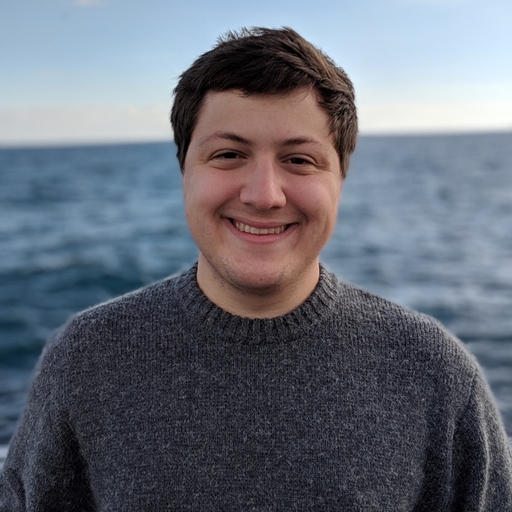
Postdoctoral fellow at Princeton University, member of the Princeton Computational Memory lab led by Dr. Ken Norman. Currently supported by an F32 NRSA fellowship from the NIMH.
I am currently on the academic job market! Please feel free to shoot me an email, or follow me on bluesky.
My interests include:
- studying learning and memory in humans
- obsessing over graph aesthetics
- spending time with my dogs
Research Statement
My research investigates the neurobiological and cognitive mechanisms of affective processes in humans, as well as how these mechanisms contribute to the etiology and maintenance of anxiety- and trauma-related disorders. I leverage these findings to test novel, neuroscience-informed interventions in healthy and clinical populations. I use behavioral and physiological assessment, advanced fMRI analyses including real-time neurofeedback, eye-tracking, and computational modeling to advance this research.
In-Progress Publications
Brooks PP^, Hennings AC^, Guzman BA, Norman KA, & Ritchey M. (Submitted). Eye movements reveal the cognitive dynamics supporting successful memory suppression. ^denotes equal contribution. Preprint available on PsyArXiv.
Hennings AC & Norman KA. (In prep). Enhancing inhibitory control of memory via real-time fMRI neurofeedback.
Chandrasekhar D, Hennings AC, Niv Y, & Berwian I. (In prep). Selective maintenance of adverse events may explain conditioning phenomena attributed to fear generalization.
Peer-Reviewed Publications
-
Cooper SE, Keller NE, Bauer EA, Lambert SR, Hennings AC, Azar AA, Bibb SA, Nemeroff CB, Cisler JM, Lewis-Peacock JA, & Dunsmoor JE. (In Press). Augmenting extinction with counterconditioning strengthens and sustains neural safety representations in PTSD. Translational Psychiatry.
-
Laing PAF, Hennings AC, Cooper SE, & Dunsmoor JE. (2026). Emotional learning selectively distorts the temporal organization of memory: a quantitative synthesis. Cognition.
-
Hennings AC, Bibb SA, Lewis-Peacock JA, & Dunsmoor JE (2026). Neural reinstatement of encoding context mediates the switch between fear and extinction recall. Journal of Cognitive Neuroscience.
-
Cooper SE, Hennings AC, Bibb SA, Lewis-Peacock JA, & Dunsmoor JE (2024). Semantic structures facilitate threat memory integration throughout the medial temporal lobe and medial prefrontal cortex. Current Biology.
-
Hennings AC, Cooper SE, Lewis-Peacock JA, & Dunsmoor JE (2022). Pattern analysis of neuroimaging data reveals novel insights on threat learning and extinction in humans. Neuroscience & Biobehavioral Reviews.
-
Keller NE, Hennings AC, Leiker EK, Lewis-Peacock JA, & Dunsmoor JE (2022). Rewarded extinction increases amygdalar connectivity and stabilizes long-term memory traces in the vmPFC. Journal of Neuroscience.
-
Hennings AC, McClay M, Lewis-Peacock JA, & Dunsmoor JE (2022). Neural reinstatement reveals divided organization of fear and extinction memories in the human brain. Current Biology.
-
Hennings AC, Lewis-Peacock JA, & Dunsmoor JE (2021). Emotional learning retroactively enhances item memory but distorts source attribution. Learning & Memory.
-
Hennings AC, Bibb SA, Lewis-Peacock JA, Dunsmoor JE (2021). The effect of top-down thought suppression on fear extinction generalization. Behavioural Brain Research.
-
McClay M, Hennings AC, Reidel A, & Dunsmoor JE (2020). The features that shape fear: How emotional intensity and threat relevance interact to guide fear learning. Neuropsychologia.
-
Hennings AC, McClay M, Lewis-Peacock JA, & Dunsmoor JE (2020). Contextual reinstatement promotes extinction generalization in healthy adults but not PTSD. Neuropsychologia.
-
Keller NE, Hennings AC, & Dunsmoor JE (2020). Behavioral and neural processes in counterconditioning: past and future directions. Behaviour Research and Therapy.